


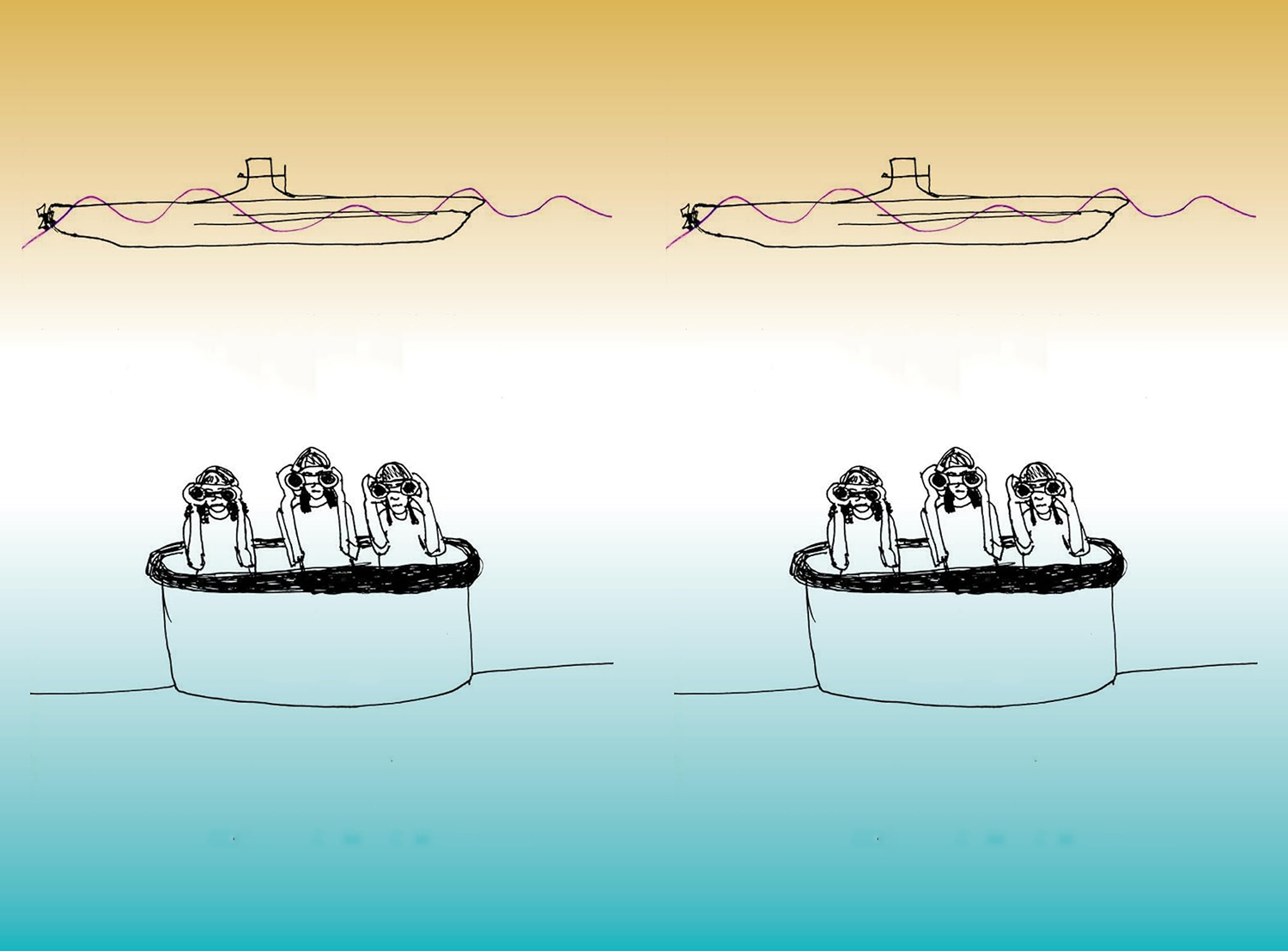
A Review of The Daughter Ship by Boo Trundle
I finished The Daughter Ship certain of one thing. This book is going to stay. Boo Trundle’s sentences are splinters, sharp and glinting, lodged beneath the skin. The novel is both forensic and elliptical, a work of survival and spiritual excavation. It’s about trauma, marriage, and parenting. More precisely, it’s about what we carry unspoken, and how we keep moving even when we’re underwater.
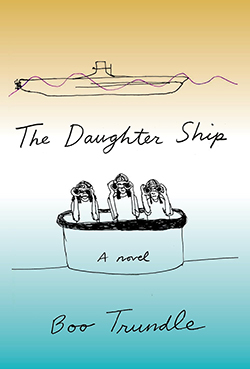
Truitt, Star, and Smooshed Bug. Three inner children. Three voices trying to steer the life of a grown woman, Katherine. I recognized them immediately. I, too, am a survivor of childhood sexual abuse—ten years of unrelenting harm at the hands of a Catholic priest who lived as my mother’s partner and assumed the role of my father. I’ve splintered, compartmentalized, dissociated, just to stay alive. My trauma is more chronologically linear, but no less fragmented. Different parts of me—Little Jo, Runaway Jo, and New Adult Jo—hold separate pieces of the truth. Trundle captures that experience with precision and grace.
Trundle gets one thing exactly right, and it’s rare. These selves aren’t metaphors. They are real, chaotic, and sometimes the only ones who know what to do. She doesn’t sentimentalize them or tidy them up. She lets them be as strange and relentless as trauma can be.
Katherine’s memories of abuse arrive murky, like waterlogged film reels playing in a submarine, submerged fragments and flotsam drifting past, too distorted to grasp, too familiar to ignore. She doesn’t feel horror. Not at first. She feels confusion, shame, and a kind of aching familiarity. Is it true? Is it something she can joke about—make funny? It’s not the clarity of a crime remembered—it’s the ache of something submerged. The metaphor of the submarine, the vessel of her own submerged truth, is genius. So much of survival is about what we forget just enough to function.
But this is also where Trundle’s work gets even more profound. In portraying the complex relationship of father-daughter incest, she shows how deeply the child internalizes blame. When Katherine says, “I seduced him,” I felt myself recoil—and contend. A child cannot seduce a loving, mature, ethical adult. Full stop. As Judith Herman writes in Father-Daughter Incest,
There is nothing subtle about the power relations between adults and children. Adults have more power than children. This is an immutable biological fact. Children are essentially a captive population, totally dependent on their parents or other adults for their basic needs. Thus, they will do whatever they perceive to be necessary to preserve a relationship with their caretakers. If an adult insists upon a sexual relationship with a dependent child, the child will comply.
And that’s exactly what Trundle makes visible. Katherine isn’t a passive victim; she’s a woman trying to reconcile what happened with the way it happened, the way she survived. And survival, as we know, is never clean.
But where The Daughter Ship really surprised me was in the second silence: the mother. Katherine’s mother is present in the background, yet nearly absent. She is the one who stays home. Drinks wine out of a measuring cup. Tries to control her intake—until the control slips. “Mom stayed home and measured out her wine in a measuring cup before pouring it into a glass. She always forgot, after two cups, to measure. Then she drank the whole box.” It’s such a small detail, but such a loud omission. Her mother is anesthetized—checked out. A kind of quiet complicity. We never know what she knows, but we feel the weight of her absence. Whether she’s drinking to unknow, or drinking because she doesn’t care, we don’t know. That ambiguity is itself the echo of too many real lives.
The Daughter Ship doesn’t resolve. It doesn’t promise. But it does something better—it trusts the reader.
As someone who has grappled with the idea of the complicit mother, this silence was chillingly familiar. It takes years to process what it means when your mother knew, or should have known, and did nothing. When she let it happen. When she needed you to pretend, to maintain the appearance of a functional home. In my own work I’ve written: “She didn’t stop him. She let it happen. And that is the deepest injury. That is the thing that does not heal.” Trundle captures this, too—not with confrontation, but avoidance. Katherine pulls away from her mother as the memories surface, and that avoidance is its own reckoning. A daughter’s silence toward her mother is sometimes the only way she can survive what was never spoken.
And then there is the marriage. Katherine and Phil. I don’t think I have ever read a more accurate depiction of what it is like to love, or be loved by, someone with a trauma history. Phil is kind. Present. Then not. He has learned to flatten his responses, to filter Katherine’s volatility through a sieve of disbelief. It is not that he doesn’t care. It is that caring too much would collapse the day. He does not believe she will hurt herself. He believes in the children more. When Katherine leaves him, it is not dramatic. It is devastating in its ordinariness. And still, the Smooshed Bug in me hopes. Hopes Katherine might return to him in a healed form, and that Phil might still be there, waiting.
On page 197, there’s a passage that nearly took the breath out of me:
He was my dad.. He made decisions about my life. He drove me around, fed me, paid for my school, gave me a car. And I seduced him. I was too pretty. I looked like him. I manipulated him. I loved him. I was too trusting. I'm a bad person. I liked it! He made me feel special. I was warm, soft, sweet, beautiful. I had brown eyes and long thin fingers. I am a cocksucker. Love will never find me.
This is the voice of internalized shame. Of a child’s confusion rewritten by an adult mind trying, and failing, to reason through what never made sense. It reminded me of Junot Díaz’s essay “The Silence: The Legacy of Childhood Trauma” when he asks: Why did I keep going back? Why did I get an erection? Why didn’t I tell anyone? These are not failures. They are the mechanics of survival.
The Daughter Ship doesn’t resolve. It doesn’t promise. But it does something better—it trusts the reader. It trusts the inner children. That final moment, when Katherine asks, “But where am I going?” and they answer, “We’ll take care of that. Go!”—that’s hope. The kind of hope that whispers: Just keep going.
The novel’s form matters, too. Trundle constructed it using cut-ups, sampling text from fairy tales, internet chat rooms, operating manuals, war novels, and other sources. Fragments stitched into something whole. Of course she did. That’s what survivors do. They gather the shards. They write their way toward coherence. They make a vessel from what was broken.
This book floored me, not because it resolved anything, but because it didn’t try to. The metaphor makes the story accessible and bearable. Survivors will recognize themselves in the fragments, in the girls, in Katherine’s hesitations. What Trundle offers is not wholeness, but movement. A step. A gesture toward integration. Maybe, if we’re lucky, toward freedom.

JoAnn Stevelos is a writer whose work has appeared in The Guardian, Chicago Story Press, The Writer, and The DewDrop. A Pushcart Prize and Best American Essays nominee, she is the author of Howard Be Thy Name and Dream Alibis, and writes the Substack The Second Silence. Her collaborative essay with photographer Sarah Blesener, “The Archivist,” appears in the Spring 2026 issue of the North American Review.
Recommended

A Review of Convergence: Poetry on Environmental Impacts of War

A Review of Stolen Flower by Irma Pineda, translated by Wendy Call