


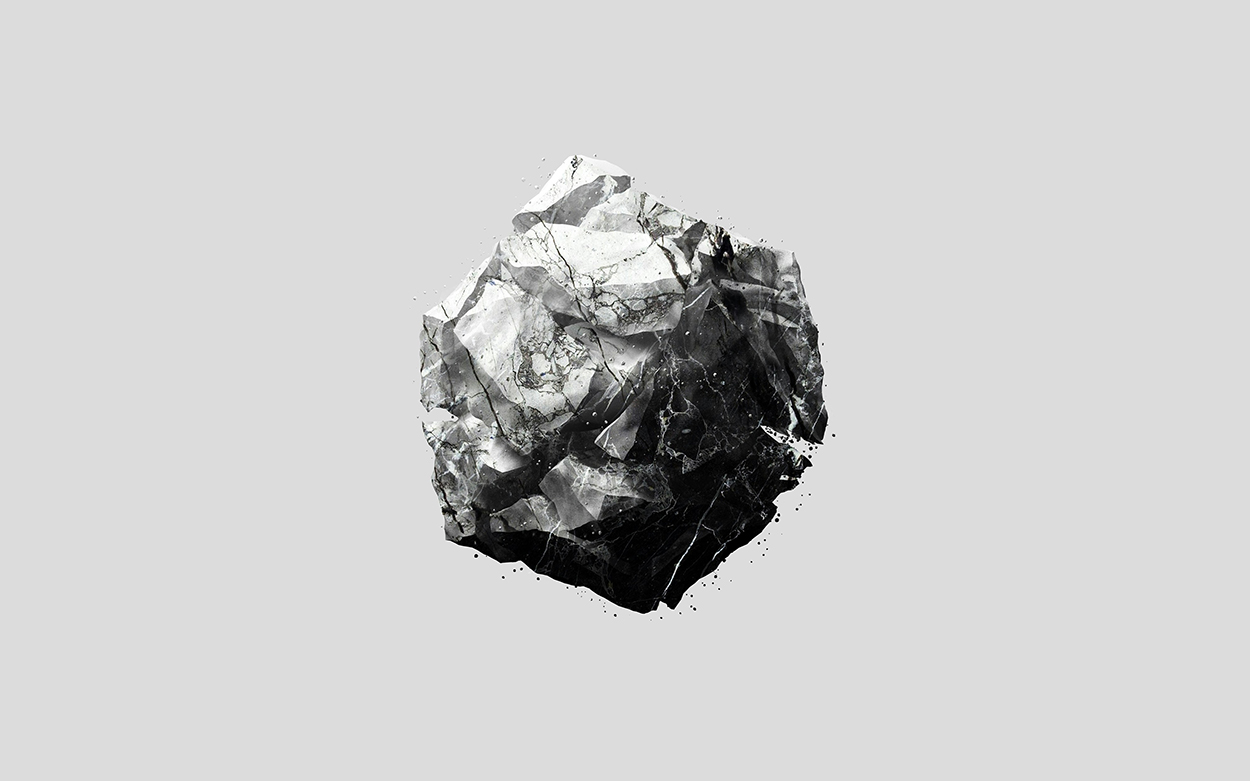
Osmium
If you look back far enough, or so the theory goes,
you can begin to build a model of what happened
at the beginning of your life that led inexorably
to this. “Led inexorably,” people say, because
in/ex/orare—not/out/plead or
unavoidable: that is, not susceptible to prayer.
“Led inexorably” we keep saying because
“ed” and “ex” remind us of dead,
because it’s nicer to believe there was a reason,
that there is a structure. And yes, there is a structure,
but “structure” doesn’t mean solid. Everything falls apart
on small scales. Even osmium, denser than diamond,
from quark’s-eye level casts an exploded sky
of molecules latticed what seems like infinite
distances in all directions. If you look back far enough,
you’d think you could see to the center, but there is no center
any more than if you look back far enough you could see
stars emerge like sprites from vast clouds of gases
to dance around a black absence, the smoky fingers
of gods tipping pendulums, the original spark.
The first light blossomed maybe fifteen billion years ago,
everything just a small packet of seeds
and then a burgeoning of limbs across the night
because everything was night, and in the night
came the moment a ventricle jumped inside her womb,
the small, lone thing that stands in for everything
because everything is unavailable, and if you look back far enough
through the universe of prayers, you begin to see
“everything” is a sieve.
Brian Clements is author or co-/editor of many volumes of poetry, including Bullets into Bells: Poets & Citizens Respond to Gun Violence (Beacon Press) and A Book of Common Rituals (Quale Press). He is CSU Professor of Creative and Professional Writing at Western Connecticut State University.
Recommended

Letter to You on Breaking My Silence
While we can
13 Images from the Dark Land: Crumb Vietnam Wordplay