


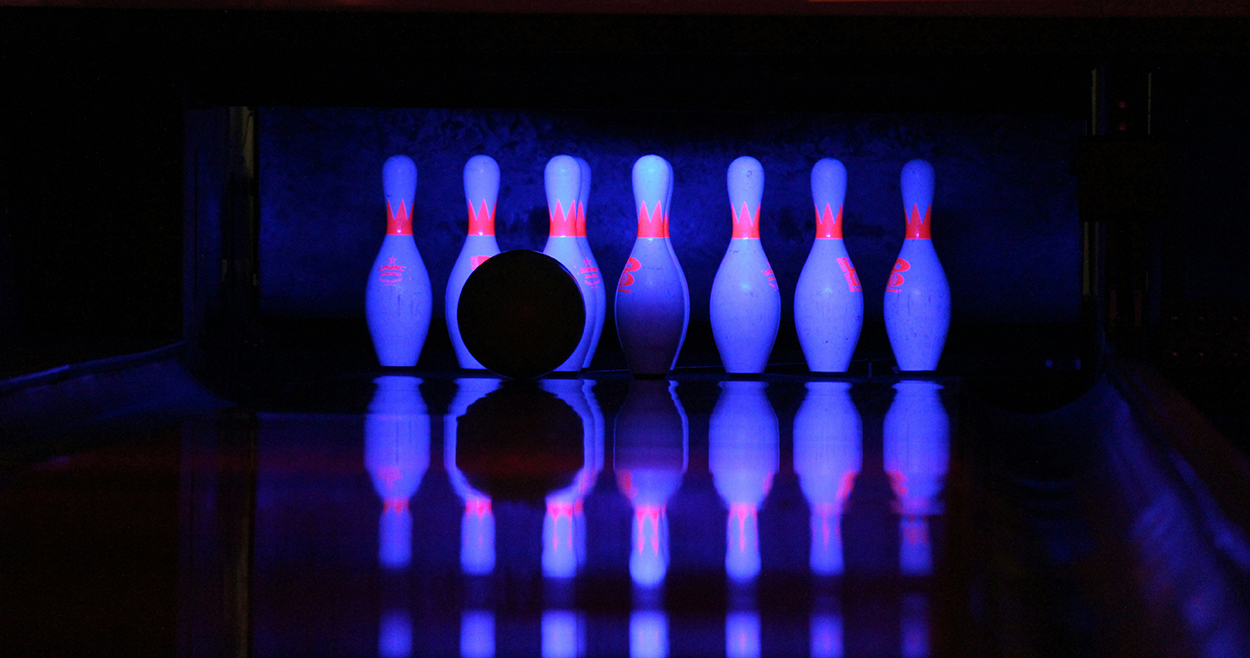
Strike
On day twenty of the war, my daughter and I are hurrying to a bowling alley in Rehovot when the sirens blare on our phones. “Pizza,” my daughter has just chirped, having noticed an Italian restaurant inside a glassy building.
Since arriving two months ago in Israel, where my wife is a visiting scientist at the Weizmann Institute, we’ve subsisted mainly on falafel, along with the pasta we’ve cooked in our campus apartment. Since the war broke out with Iran and missiles began falling, we’ve hunkered down with about five other families in a communal shelter under our building, rarely straying far.
This isn’t the first time we’ve been caught on the street in an attack. Last Monday, rushing to my daughter’s school volleyball practice, which was still held in-person, despite her classes moving online, we tried to take cover in the shelters at her school, only to find them closed. (Later, we learned that the coach had the key, and she was running late.) We ended up sprinting into the basement of a Thai kickboxing studio—which smelled about as you’d expect a Thai kickboxing studio to smell—and heard rumbles outside. It turned out that a missile exploded in Lod, the next town over, injuring two or three.
This time we find ourselves alone on a street in the heart of an industrial park, too far from home to head back. “Come on.” I grip my daughter’s arm.
Prior to our leaving, my wife mentioned a shelter two floors underground at the bowling alley’s building. I can see her calling on my phone but can’t answer as I study Apple Maps. Five minutes ahead on foot. You have about ninety seconds to take cover in these alerts.
My daughter, though worried, looks surprisingly calm. We haven’t yet told her about the attack on Beit Shemesh, where nine people were killed, nor the deaths in Adanim and Ramat Gan, not to mention the scores killed in Lebanon, Gaza, Iran.
Unlike the shelters at our apartment and her school, this one lacks a blast door and visible pressure valves. Is it even a protected space?
Ahead of us, a mother and three boys scurry toward a building. That must be it. They stop in the lobby and slap the elevator button.
Street sirens blare. A missile could fall any time. My heart thwacks.
Clutching my daughter’s arm, I pull her toward a stairwell. Are you safe? my wife texts. Figuring we’ll lose signal, I click a thumbs-up and almost trip on the stairs. Descending the dim corridor, which reeks of urine and mice, we pass -1, which probably says bowling—it is hard to make out in the gloom—and continue to -2, where a bolted door opens into a dark parking lot. The other door is locked. We run back to -1, swerve around a hall, and find the same mother with her boys slapping the elevator button again. “Miklat?” she asks me—“Shelter?”—as if I have a clue.
Stupidly, we follow her into the elevator and press -2. An interminable silence follows as the doors rattle shut, and I think—after I cautioned my daughter twice in the last week never to board an elevator during an attack—that this will be it for us, in this awful, cramped space.
The elevator opens again beside the parking lot entrance, where twenty kids and parents huddle in the dark between columns, most checking phones. My daughter recognizes a classmate. Unlike the shelters at our apartment and her school, this one lacks a blast door and visible pressure valves. Is it even a protected space?
I text my wife that we are safe—she has taken shelter below our building with our other two kids—and try to hold my daughter’s hand, but she wants to talk to her friend. More afraid of being seen with her “cringe dad” than a falling missile, she and two others hover next to a parked Kia. Folding chairs are set out among puddles, and striped caution tape dangles from the ceiling. At least we are in the right place.
In the front seat of the Kia, a slightly bearded man reclines with his phone. He is drinking a cappuccino. Other parents converse, thumbing their screens.
A loud boom rocks the walls. A few people glance up, but most return to their screens.
I think the interception was right above us, my wife texts.
Later, we will learn a cluster bomb was intercepted above us, and debris showered our town, crashing into a building. Two people were hurt.
Our phones buzz again with alarms. More missiles coming, my wife texts, as I near my daughter while trying not to cramp her style. She’s only recently started school here and barely knows the other seventh graders.
We hear a couple more booms, these not as loud, which rattle the garage’s piped walls.
Strangely, toward the back of the lot, a white sedan revs and ascends the exit ramp. Where in the world is he going? Perhaps he also wants a cappuccino.
A few people move toward the exit. A parent tells the children to stay. My wife texts that the missiles were intercepted but the alert hasn’t ended. Rescue teams are still checking.
Finally, our phones buzz with all-clears. I tell my daughter not to take the elevator, as others now do, which makes me deeply uncool. Climbing the damp staircase, we find ourselves blocked, this time by a crowd waiting to reenter the bowling alley.
We stream in, immersed in the smell of stale cigarettes and felt-lined pool tables, which are impossibly green. Shelved whiskey bottles mirror the alley’s blue lanes. It feels like walking on Mars, or somewhere even more foreign.
Gradually, a familiarity takes hold; in fact, it resembles the cosmic bowling parties we went to back home in the States.
If another missile is coming, would we even hear the alert?
Soon techno-pop resounds across the shining lanes, interrupted occasionally by the crooning voice of a Mizrahi singer, possibly Osher Cohen. Salted pretzels turn behind glass. The kids eye a pop-a-shot game, whispering and smiling, and perhaps a bit scared.
My daughter races toward me and announces that Texas won in March Madness last night. Oh, and how is she doing in our family pool?
Later, as she bowls with the other kids, even racking a spare, of which she is enormously proud, I buy her a Coke she has begged for. We don’t normally allow Coke in our family. But this is wartime, she explains, grinning slightly.
It is served in a glass bottle and contains real sugar and costs us twelve shekels but is worth every one of the twenty minutes I’ve had to wait in line. “You’re the best daddy ever,” she says half-sarcastically.
And now, as she bowls, I can’t help but wonder what the Iranians are going through, and the Lebanese, too.
Yesterday, four Palestinian women, one of them pregnant, were killed when an Iranian cluster bomb struck a beauty salon near Hebron. No sirens sounded in advance. Israel doesn’t give warnings to Palestinians, and it’s doubtful they’d have shelters. We’ll also learn that a US missile strike on a school and sports hall in Iran on February 28 would kill at least twenty-one people, including Elma Ahmadizadeh, a fourth grader, and Elham Zaeri, a fifth grader, both of whom were at volleyball practice with their coach, who was also killed, according to a Times article.
Emerging from the darkness, and feeling no less antipathy toward our adopted country, or the one from which we came, as well as the war they’ve both waged, I also feel a bit of gratitude, as if these interceptors have just saved our lives.
My daughter is dancing—others are, too—as the lights flash on the lanes, glittering red, green, and blue—and the bass thumps to a song, some Israeli pop beat. Even a parent or two bop. If another missile is coming, would we even hear the alert?
It’s clear everyone is trying to live normally, to let their children enjoy life, and, if not exactly indifferent to the suffering of others, and hardly unaware of it, at least content to enjoy, if only for a moment, the thump and pulse of these beats, the smell of greased pizza, stale cigarettes, salted pretzels, and bottles of Coke.
Rehovot, 2026
J. A. Bernstein is the author of a novel, Rachel’s Tomb (New Issues, 2019, A.W.P. Award Series Prize), a forthcoming memoir, Afterlight (Galileo Press), and three chapbooks. His work has appeared in The Kenyon Review, The Threepenny Review, Boston Review, and other journals. A Chicago native and two-time Fulbright Fellow, he is an associate professor of English at the University of Southern Mississippi.
Recommended

Wig

Lapsus Calami

Once and Future Kingdoms