


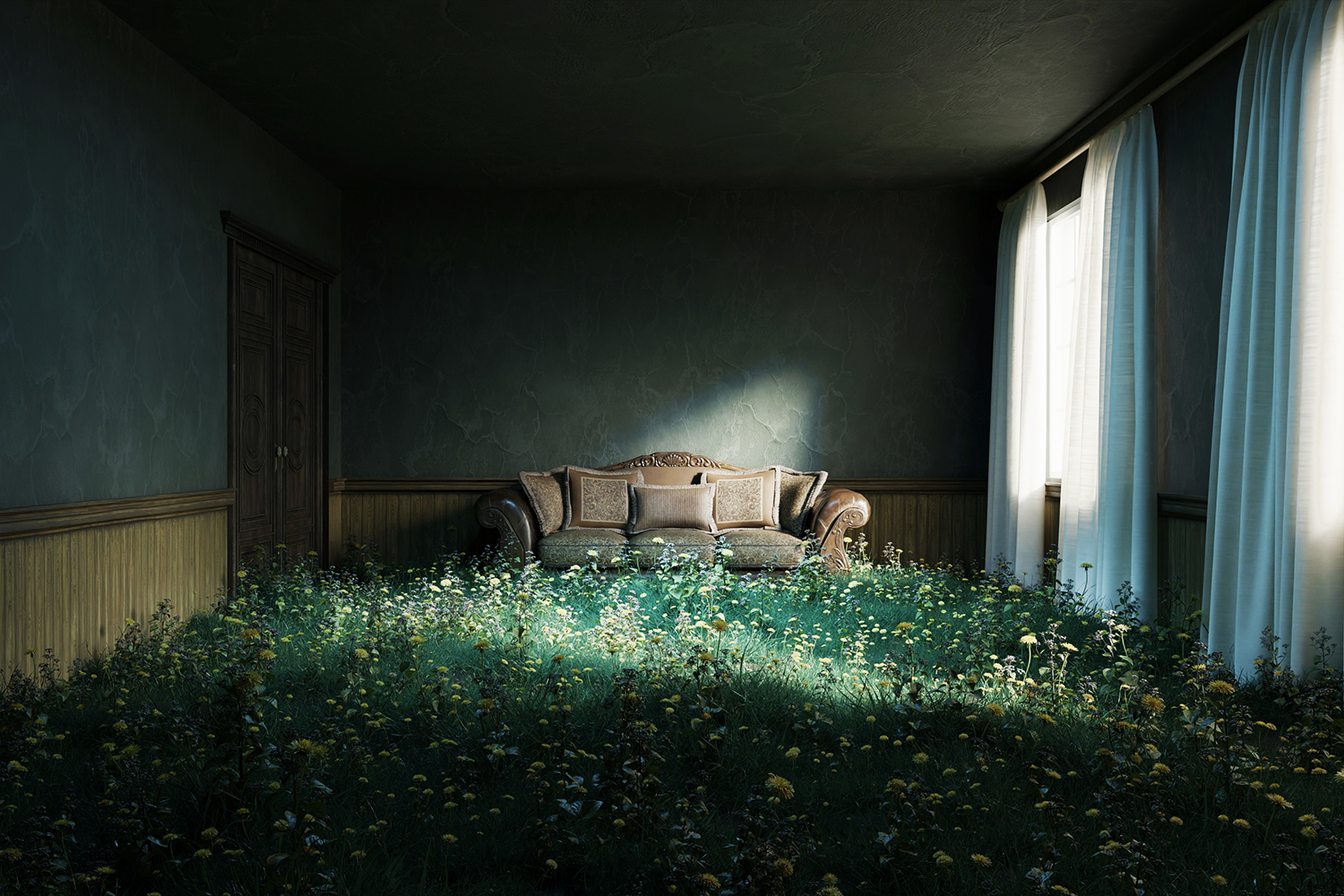
Story
In the story they tell the children, mothers desecrate their own
gardens. Vegetables that took years to coax into strength are torn
from their beds and tossed to a burn pile. Bean poles and grape trellises
tipped, cracked, stomped. Just a small one, they first think, and press
a porticoed seedpod till it pops. Just another. Then entire stalks
pulled at the root. Rows of richly fertilized soil soaked in gasoline
and lit. The story has no moral, nothing cyclical. The gardens
are razed, then they are bare.
In the story there is an eclipse on the final day of summer.
Entire cities file into the streets to stare at the sky. And what happens
is they see nothing. After hours of silent staring a small murmur
moves through the masses, erupts to chatter. Not surprise,
exactly. Not disappointment—there is relief in being given
something not to care about anymore. To share in that.
In the story there is nothing for the children to be ashamed of.
And it isn’t a story—it is a song, woven through the cord of them.
Sewn through sinew. It sinks in and slips through. They are, after
some time, released of it. But as it carries away, its shadow colors things.
They find it shifting small patches of light in cold-water
studio apartments. They are drawn to it on trips into or away from cities.
They encounter it, sometimes, just behind the heads of people,
the kind of uncontrolled glance that hovers above what once was
in focus, a gradation of perspectives stacked like a choir.

Jess Williard is the author of Unmanly Grief (University of Arkansas Press)
Recommended

Osmium
13 Images from the Dark Land: Crumb Vietnam Wordplay

With Regard