


Six Things that Seemed like Good Ideas Till They Didn’t
Honeysuckle: its heavy sweet smell evokes the lazy bees and slow hours of childhood summers, delicate trumpet-shaped flowers attracting butterflies and hummingbirds. When I was young, I imagined that romantic love would feel secure as a warm summer night with the perfume of honeysuckle, like jasmine with a hint of vanilla, wafting through the window. I didn’t know yet about the overzealous types of honeysuckle, also known as woodbine, that strangles trees and can alter the structures of whole forests.
Lead paint: I married at twenty and moved into an old brick duplex built long before 1978, when lead was outlawed in paint. Lead paint went on smoother, dried faster, was more durable, resisted moisture and therefore corrosion, maintained a fresh appearance. It also could cause anemia as well as kidney, liver, brain, and nerve damage. My marriage was less durable, corroding quickly, disillusioning but ultimately less toxic than our walls. But afterward, caution infused my childhood dreams.
Kudzu: I moved a few times to different states for different jobs before I ended up in South Carolina at a small college. I was lonely those years as I drove down highways where the beautiful menace of kudzu shaped itself around trees and phone lines, draping down like strangely lovely green monsters. Kudzu spread its stealthy green blankets across the ground as if for a picnic. It wrapped itself like windblown laundry around power lines. It sleeved utility poles. It crammed road signs into leafy green outfits. Benignly, it cheerfully smothered everything in its path. I avoided lovers who overtake your life, their Tupperware in your cabinet, their white Corelle plates mingling with your blue willow pattern in the dining room hutch, their slippers parked in your den, their whiskers shaken from a razor to speckle your sink and drift behind your bathroom door.
It fills every available space, it reduces forage areas, it shuts out native vegetation, it scrawls crisscrossing scratches across my legs, wounds that well up with blood as red as red roses.
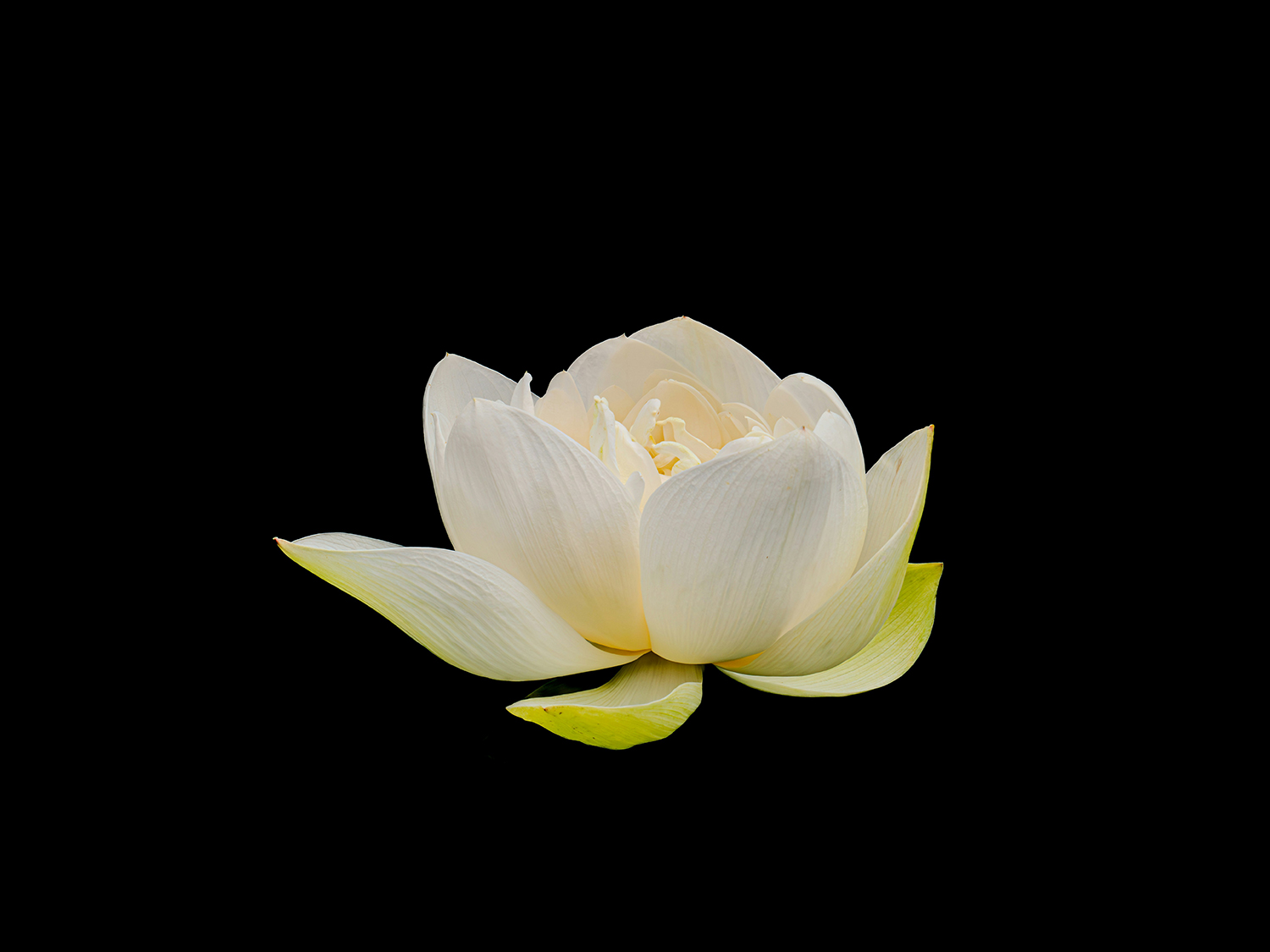
Lotus: I adopted a child alone. In China where I met her I walked past lotus edging a pond with its big, gorgeous, waxy flowers like stylized porcelain dishes. Unless contained, these flowers, in Buddhism, are symbols of purity, enlightenment, and rebirth, smother, asphyxiate, stifle, choke, throttle entire lakes. Nearby, the wide-open mouths of carp rose, pocking the surface like bubbles of boiling water, like children demanding to be fed. Those fish, those lotus, turned out to resemble parenthood: beautiful but relentless, all-consuming.
Multiflora rose: My new boyfriend, the first person I’ve considered a long-term prospect in twenty years, tells me to watch out for the multiflora rose as we crest a hill on his ATV at his New York farm. He’s wearing tall, muddy work boots and a dorky hat with earflaps. I have on shorts and sneakers, my legs bare, unprotected.
Stronger and more enduring than our most tenacious notions of love, its roots plentiful and deep, multiflora rose has a dazzling sounding name. At least I think so as the four-wheeler lobs me in the air when we whip around curves, as it levitates me as we roar down hills. The name blooms in my imagination into petals the texture of velvet and damask: cherry and cream, lavender washes, apricot red and butter gold. Instead, we alight in a barren field barbed with thorns that cling fast to whatever they snag. They grab at my pants and socks. They razor my skin.
Our children are grown or nearly so, families scattered, our lives tangled and complicated. His profile promised eternal devotion to any woman who could beat him at Jeopardy. He didn’t mention the partner who’d died only weeks before. He said he loved me way too soon. He drove too fast. He followed too close. I couldn’t beat him at Jeopardy.
Multiflora rose, I’ll learn, is a noxious weed. Once touted as a living fence that would replace barbed wire and fenceposts, it also provides cover for cottontails, bobwhites, and white-tailed deer; its seed feeds wild turkeys, ruffled grouse, thrushes, blackbirds, and redwings; its pollen attracts honey bees and bumblebees and beetles and pudgy, fuzzy bee flies. But for all that, it is greedy and overenthusiastic, it comes on too strong; runners from a single plant grow into dense, impenetrable thickets of interwoven branches, layered and tangled, knotted and knitted, intertwined and inextricable. It fills every available space, it reduces forage areas, it shuts out native vegetation, it scrawls crisscrossing scratches across my legs, wounds that well up with blood as red as red roses.- Asbestos: That day we talk about potential that goes awry, about things that seem like good ideas till they don’t. Honeysuckle, lead paint, kudzu, lotus. How previous generations celebrated asbestos because it didn’t decompose or decay, because it stood fast against the elements, used in concrete, bricks, pipes, insulation, drywall, flooring, roofing before the discovery that it causes potentially fatal diseases.
Who would take any risk, knowing about the double-edged swords of every choice, the way miracles can turn to menace, the inevitable tradeoffs of every decision? But that day in the field we start to take root, even knowing how the dense thickets of connection can turn and twist and snarl up tight. You can pull, dig, mow, burn, and cut multiflora rose, you can yank it by a chain with a tractor, but it’s impossible to eradicate altogether.
We walk through an unbeautiful field of betrayed promises where dreams still manage to proliferate, imagining something as steadfast, as ineradicable as this weed. We wade through thorns that stab and grab, that dig into my skin like the claws of a terrified cat, that scribble illegible lacerations. That cling fast and hang on tight.

Nancy McCabe is the author of nine books, most recently the middle grade novel Fires Burning Underground (Regal House 2025), the comic novel The Pamela Papers: A Mostly E-pistolary Story of Academic Pandemic Pandemonium (Outpost 19 2024), the young adult novel Vaulting through Time (CamCat 2023), and the memoir Can This Marriage Be Saved? (Missouri 2020).
Recommended
Lapsus Calami

Once and Future Kingdoms
The Lobby