


Cleaning House
Three months after his death from pancreatic cancer, she cleaned out his study and found a message to God in a folder he’d named “Sacred Correspondence.”
“God, please take my anger now. Don’t wait for me to transcend my emotions, which could take lifetimes.
God, root out my itch to put down others behind their backs.
God, help me clean house, so my mind isn’t cluttered with unnecessary things. Take all that I no longer need, as I near the end of life in this world.
And please, God, turn my fear of death into my reminder to make the most of the present moment.”
He had told her that God was a “paradigm meant to bring you to oneness by way of twoness,” or something like that. She never thought he’d write a personal appeal to a paradigm. Should she get his letter framed and hang it over the fireplace?
He wasn’t an angry man or one to criticize others. But she was getting rid of his unnecessary things, because God didn’t help him clean house before he died.
She found leaves from the backyard trees in the pages of his copy of The Complete Poems of Walt Whitman. He’d used the leaves as bookmarks and identified them by their stems, which were the only parts of the leaves exposed when the book was closed.
She turned the pages. An oak leaf marked “A Song of the Rolling Earth.” The stem of an elm leaf led her to “Miracles.”
In the tool shed she touched the smooth wood handles of shovel, spade, rake, and hoe. When working in the yard, she would remember his hands had held them too. She loved gardening, even though she was in her seventies and felt the strain on her legs in the afternoons.
In the woodshed she found his notebook, which he’d written in when he surveyed the view of the wildlife preserve behind their house.
“The creek flashes sunlight between the sycamores on the bank. Soon their crinkly brown leaves will fall.”
The entry was dated August 20th, two years before he died, and there were other entries from the last five years.
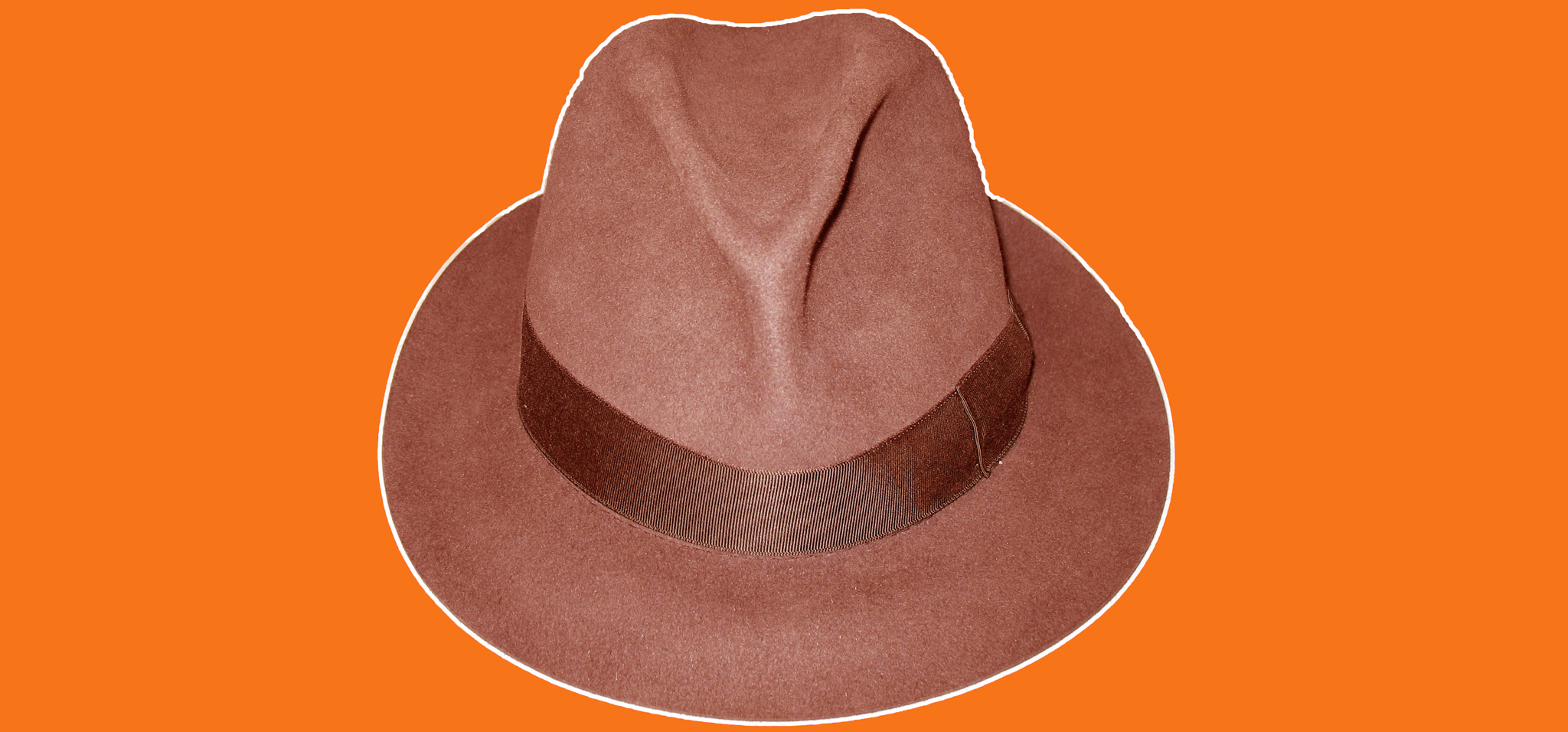
She would take his clothes to Goodwill, but keep his brown fedora.
When he sold his yoga business and retired, he took long walks through the preserve. One windy Indian summer afternoon, he returned from a walk, holding his fedora to keep it on his head as she gathered the clothes she’d hung to dry on the backyard line.
“Help me take them in. There’s the clothespin bucket. How were the woods?”
“A dance of shadow and light in this wind.” He snatched the clothespins from her chambray shirt and tossed them in the bucket. He clutched her shirt to his face with both hands, sniffed a deep breath, and let out a loud “Ahhhh!” as his hat blew off.
She was inspired by his gusto, which he never ran out of, until the end, when he wanted to die.
“I don’t need opioid dreams to distract me from the experience,” he said, as he lay in the hospice bed in their living room.
Yet it got so bad that night, he asked for the liquid morphine. She squirted it under his purple tongue, and he fell asleep, his face calm after the siege of pain.
He wanted a “green death,” which wasn’t an option in their state. He told her to bury him unboxed in the backyard. Recycle his body. She didn’t say yes, knowing she’d break the law if she did as he asked. Still, his request was aligned with the way of his life and love of the natural world.
It took her a month to get rid of his unnecessary things, like his letter to God. She hung his fedora over the fireplace.
As time passed, and she forgot where she’d dug his unmarked grave, she thought about him less and less. It was something he taught her. How to move on, just as he had.

Robert Hambling Davis has published in The Sun, Memoir Journal, Philadelphia Stories, and Santa Monica Review. He’s been nominated for two Pushcart Prizes and awarded three Delaware Division of the Arts Individual Artist fellowships.
Recommended

Observations Upon Experimental Philosophy

Matriarch
River Dreams