


Spare Skin
Heidi lies face down. The thin sheet of paper is cool on her cheek. She feels like she’s about to be slid into an oven to be baked.
“This is the only thing that’s gonna hurt,” the doctor says. He’s young. Wearing glasses. His hair falls below the line of his collar. He’s not her usual person; she’s off on vacation, probably somewhere nice.
“That’s ok. Thanks.”
His hand hovers.
“No need to thank me for inflicting pain,” he says with a small chuckle.
The needle sinks into her side. Heidi imagines it pumping anesthetic, filling the area around the base of the thing growing from her flank.
He was right. It does hurt. Like the sting of a bee.
•••
She’s outlined the play. More than the usual amount. Two acts. Five characters. Two locations, one on each side of the stage. The second act thirty minutes, the first forty-five. Conflict. Rising action. Dialogue. Too much of it. But she spits it out just the same. She writes without editing. It’s her way. Later on she’ll chop and chop. And then she’ll begin to carve.
When she finished the first act, she stared at her computer. All that white space.
She wondered what would happen during the intermission, assuming her play was ever staged. How that single word in the program—innocuous, declarative, godlike—could cover so many experiences. Trips to the bathroom. Hurried cigarettes. Draining wine in three or four gulps. Flirting with a stranger in a lounge with mirrored walls.
Intermission.
Everyone wondering what comes next.
And that’s when she got stuck.
•••
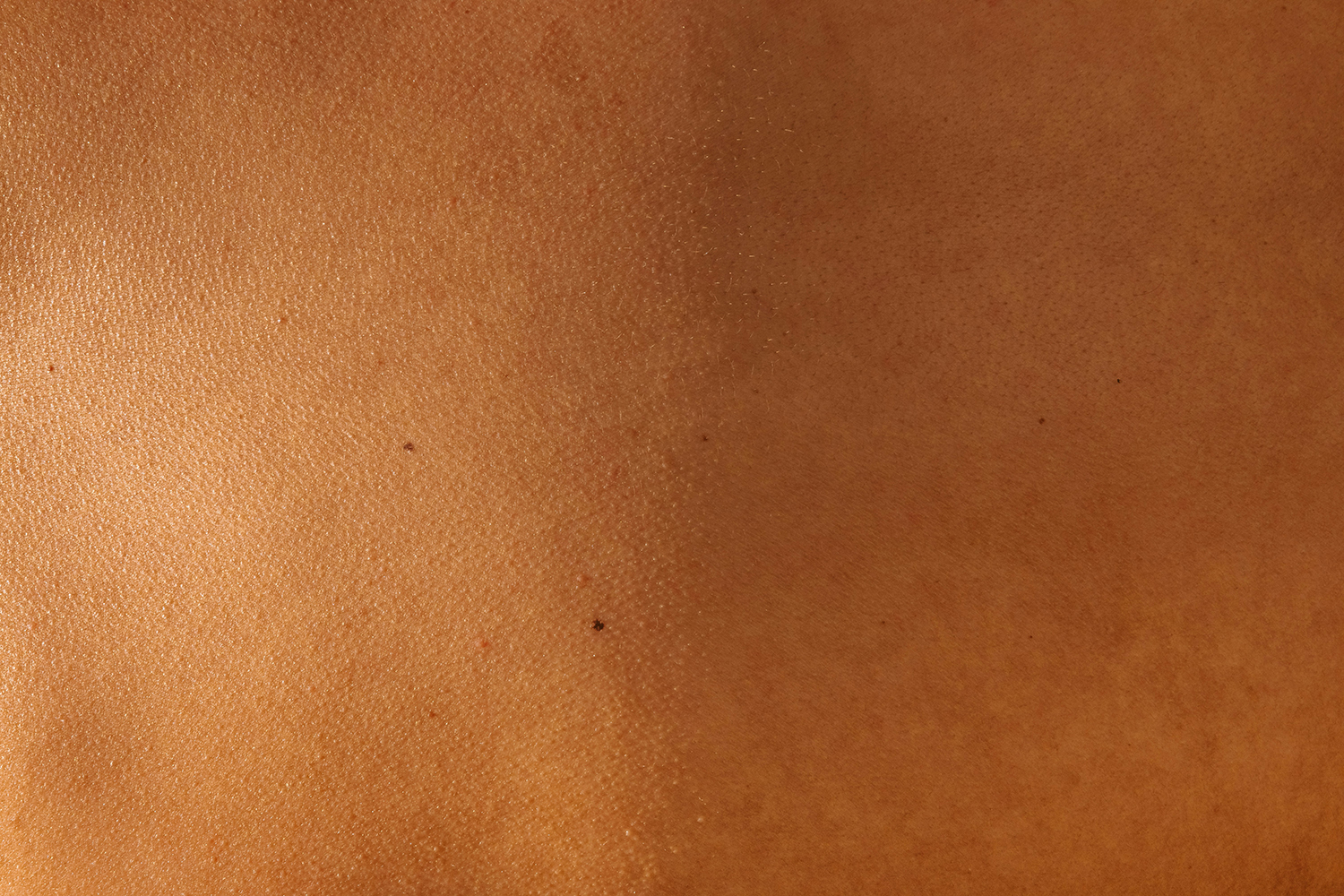
The skin tag came out of nowhere.
She was standing in front of the mirror in her small bathroom, brushing her teeth after getting out of the shower. The fan was for shit. It needed to be replaced. She opened the door to let the steam out. The fog slowly cleared from the mirror as her electric brush shook loose plaque. She quickly ran her eyes over herself and saw something that made the whirling bristles helicopter over a single tooth. She turned it off and leaned forward. She pivoted and touched her side with her index finger.
It was long. At least half an inch. It looked like one of the tiny caterpillars that descend from trees on fine silk strands in the spring. It bent as she touched it. It didn’t hurt. But it also didn’t feel like it was part of her body.
She reached for her phone and googled it as she stood there.
She’s written eight plays in the last five years. Three of them have had full productions.
A skin tag. Harmless; mysterious.
She was almost fifty, freshly single, living alone. Had it come to keep her company?
She got dressed in the bedroom. She felt the tag rubbing against the rough cotton of her shirt.
She made the appointment that morning.
•••
She called her ex after finding it. He sounded like he’d just woken up, even though it was nearly ten.
“They’re common,” he said. “Nothing to worry about.” He worked for the city planning department. They’d lived together for over a decade and she still didn’t really understand what he did there. And now that they weren’t together anymore, she probably never would.
“Are you sure?”
“Heidi,” he said. “I’m not a doctor, yeah?”
She hung up without saying goodbye. It was one of her signature moves.
•••
“What now?”
The doctor hovers over her. Heidi wonders if there are photosensitive areas on the skin of her back. She read once that the eye has evolved several times out of patches of cells that react to light. They shy away from it or they tilt toward it.
Plants can sense light too. Given a few hundred million years, perhaps they’ll also develop eyeballs, ones that turn at the ends of green stalks and look down at the soil and wonder why it is that they can’t fucking move. They can see other plants. They can even wink at one another. But they’re rooted.
Or will plants need brains before they’re awarded eyes?
Mushroom colonies have interlocking fibers that resemble neural networks. They stretch through rotting leaves and dead slugs and lichen patches and whisper things to one another.
Maybe it’s mushrooms that will grow eyes over deep dark time.
“I’ll just wait for the freezing to take hold.”
The doctor creeps like a spy; his voice comes from the other side of the room, near the door.
No, Heidi thinks. There are no proto-eyes on my back after all.
“I need to grab a couple of things. A bandage.”
“What else?”
“Just a bandage.”
That’s not a couple of things, she wants to say. Maybe he’s getting something else, something he doesn’t want her to think about.
“What will you use?”
“Use?”
“You know. To remove it.”
“I’ll chop it off with some surgical scissors,” he says and leaves the room. The door closes behind him with a clink of metal on wood.
It sounds organic, as if the building is hiccupping.
•••
She’s written eight plays in the last five years. Three of them have had full productions. One of these was at the Neptune in Halifax. She flew from Vancouver with a stopover in Toronto.
As they approached the airport, the plane began to buck. It didn’t seem to want to land there. Moisture streaked the windows and the seatbelt lights went on. For the first time in her life, Heidi grabbed the vomit bag and held it in her lap with the top open. The fussily-dressed man sitting next to her turned away while the plane made its final descent.
She didn’t puke on the plane. But as soon as she’d picked up her luggage, she went outside to the taxi stand and vomited in a squat evergreen bush.
She walked up to the first car in the line and the driver pulled away without looking at her. She went inside and bought a mint tea and drank it. She used lots of sugar. Then she went outside again and got into a different taxi.
•••
She waits for the doctor to come back. The air is cool on her bare skin. She smells disinfectant. Everything is clean. She’s wearing a mask. But she smells things anyway.
She likes it that way. She builds flesh from putty until that flesh begins to speak. To her at first. Then to the other people she builds.
A child cries out from one of the other dozen examination rooms. The small shriek is followed by weeping. A needle, probably.
Well, Heidi hadn’t cried.
She touches the skin tag. To say goodbye. After all, the little mole that suddenly grew into a giant has been there for as long as she can remember.
The nerves are blinking out. The surface of her skin feels half dead. She withdraws her finger and rubs it against her thumb.
•••
Most moles appear before the age of forty. Heidi has more than her share. The most prominent is the one on the left side of her chin, an inch below her mouth. Her mother used to bug her about it, suggesting she have it removed. She said it was ugly.
But Heidi disagreed.
It’s part of the architecture of her face.
•••
It’s hard to break into playwriting, even with an MFA. And Heidi has a quiet voice. But she’s good, and knows it.
She still has to work. She’s a teacher. Composition classes at the local college.
Her degree has made her some money after all.
•••
As is usual for her, the new play grew out of characters. They wrote their own story. Not the other way around. She likes it that way. She builds flesh from putty until that flesh begins to speak. To her at first. Then to the other people she builds.
But these people had said what they said until they’d stopped. Heidi didn’t think much of it at first. But weeks went by and they remained silent.
They were turning back into clay. If more time went on without them speaking, that would also dry and crumble. There would be nothing but small bits of desiccated earth on smudged and wrinkled paper.
She’d be unable to finish the second act.
And then they’d die.
•••
He comes back in a minute later and frowns at her back. “You know, I think I should maybe get a bigger bandage.”
“Oh?”
“Yes.” The doctor touches the skin tag. Heidi feels pressure. Nothing else. “There might be some bleeding.”
“Well, I guess there would be. Since you’re chopping it off.”
“Why say that?”
“That’s what you said. That you’d use scissors to chop it off.”
“Did I?” He sounds amused and offended at once.
“Yeah.”
He shrugs. He leaves the room again.
The door closes quickly this time; it makes a wind that rolls across her body.
•••
When she moved into her new apartment, it was the height of summer and there was a heat wave. She has a cat. Dander. He’s fat and stupid and very much an indoor cat. Her windows open onto West 41st, which is quite busy most days. If Dander hops out of an open window, he’ll surely die.
She asked her landlord to install screens so she could let air in without Dander escaping. In the meantime, the sun blazed. Even when she closed her blinds, it would curl around the edges and make an oven of things. She and Dander would sit and look at one another, panting and shedding and waiting for the evening.
The technician came and measured. He frowned and pursed his lips and scratched his head as though he worked at CERN.
“It’ll be tough,” he said, “with those bars.”
“Can’t you remove them?”
“Yeah. But I might have to drill again so they’re further away from the windows.”
“Well, that’s fine with me.”
He sighed and gave a sad shake of his head.
“I’ll have to check with the property manager.”
Heidi didn’t know if this was an invitation for her to say something.
The technician craned his neck and looked at the window from a different angle.
“It’ll take a couple of weeks to have the screens cut.”
“Oh. Custom screens.”
“That’s right,” he said with a small smile, as though she’d just cracked a riddle.
•••
The doctor comes back in.
“Got the bandage,” he says. She hears in his voice that he’s soured on her.
“Right,” she says.
He picks something up from a tray.
“This shouldn’t hurt at all. If you feel anything, let me know.”
She mumbles. Her breath creates tiny waves on the paper sheet. She closes her eyes.
•••
The technician came back a month later. By then, it was September and the worst of the heat had passed. He made a sloppy job of it. Excess inches of screen drooped outside from the bottom of the windows like spare skin. Small bits of foliage got stuck in the nylon mesh. But she could open her windows and that was something.
Dander took to sitting in front of the screens. He wasn’t the kind of enterprising cat who would scratch at them. He closed his eyes as the breeze crossed his face, occasionally raising his head to sniff things from outside, the smells that managed to skate over the surface of traffic emissions.
•••
“Here we go.” The tone of his voice suggests that this is going to be a bit of an adventure.
There is pressure and then there is nothing. From the corner of her eye, Heidi sees something red and pink suspended in tweezers. The doctor frowns at it. She has no idea what he expects to see. Then he deposits it on some paper of the same type she is lying on.
Big sausage, small sausage, she thinks.
She nods at herself. She likes her smile. She goes into the bedroom and gets dressed.
He holds a cotton swab on the new hole in her body.
“I’m just applying some pressure.” He removes his fingers. “Hm.” He walks to a cabinet and rummages around until he finds a small tube. “I’m gonna put some chemical cauterizer on you. You’re bleeding quite a bit.”
Heidi shrugs to indicate both trust and indifference.
He squeezes it on. There’s a cold sensation and that’s all.
“Good,” he says. “That should do it.”
•••
She takes the bus home. The freezing is beginning to wear off. It burns a little. There’s the start of a deep itch. The doctor said she should treat it like a cut. But it seems like it’s more than that, that the word doesn’t do it justice.
A big man sits down next to her. She’s happy the wound is on her right side, the one facing the window, so he can’t brush against it.
He takes out a book. Heidi is surprised. Very few people read on the bus anymore. Neither does she. She can’t read when people are talking. She listens to music instead. Not now. She doesn’t want to, not with this new gap in her side. She wants to hear the world around her.
She glances at the book. It’s an old paperback. The pages are off-white. Pulp. One day it will melt. If it’s left out in the rain, it will swell and then disintegrate. She can’t see what book it is. The man holds it at arm’s length. He must be losing his vision.
Both paper and eye return to the earth in the end.
•••
When she gets home, Dander watches her carefully. He can smell the clinic on her. He’s hated the vet ever since they cut his balls off.
“I got snipped too,” she says and then regrets it. Dander’s big yellow eyes don’t break contact. He must be thinking that she’s got the balance all wrong, that the thing that was done to her is not the same as the thing that was done to him.
“Sorry,” she says.
Dander turns and hops onto the couch. He licks his diminished genitals.
•••
Heidi opens her laptop. She decides to read what she’s written. She takes her fingers off the keyboard and scrolls with her mouse. She will not edit. She will simply read.
It takes her an hour to get to the end of the first act. She knows how she wants the play to end. But she can’t think of how to begin. She goes to the window in her bedroom. She likes to write in here. It’s dark. Quiet.
There’s a garbage truck going down the side street. The floor trembles beneath her. Her side hurts. Perhaps the clot is being shaken loose. She puts her hand there and lifts it in front of her face.
No blood has seeped through the bandage.
Good.
•••
She was worried at first about how much she was bleeding. But then she looked at the wound and she saw that there was a large circle that had been opened. A window into her body. No wonder it bled.
She sits at her computer every morning. The last two days, all she’s managed to do is reread the first act, doing a little editing. It’s like a song, she tells herself. You have to begin to sing and then the rest will come to you.
But a play is not a song and it is not coming to her. Her characters do their dance on the page and then sputter like robots with dry batteries and refuse to get up for act two.
•••
A week goes by and the scab has fallen away and now there’s a fresh pink scar.
She stands in front of her bathroom mirror. She’s just come out of the shower and she’s still tired. She’s going to write today, no matter what. She is about to leave the room when she notices something on the other side of her belly. She leans forward.
Another skin tag, not quite as big as the first one.
She touches it and this time, it doesn’t repel her. It’s warm under her finger.
She nods at herself. She likes her smile. She goes into the bedroom and gets dressed.
She thinks about calling the doctor’s office. Getting the thing removed is really no biggie. But she sits down at her computer and begins to type and manages fifteen pages in ninety minutes.
She takes a break to make tea and then comes back in and finishes a rough draft of the second act and the tea gets cold and she doesn’t end up calling the doctor after all.
Sean Maschmann’s short fiction has appeared in Fourteen Hills, Post Road, Prime Number Magazine, and elsewhere. He is a copy editor for JackLeg Press. He lives and works in Vancouver.
Recommended

A Month and a Wake-Up
Our Lady of Angels Fire: Half-Life of a Hole

The Stranger