


An Interview with Ren Cedar Fuller
If ever a book met the historic moment, it is Ren Cedar Fuller’s debut collection of essays Bigger. Ren’s writing is wise, funny, tender, visionary, and big on love. She and I exchanged emails and spoke over the course of several weeks, and it was clear her heart is larger than mine because she has thrown open the doors (and arms) of acceptance. I felt like a better person for the experience of having interviewed Ren, an experience I’m happy to bring to all of you.
Amy Roost: What is Bigger about?
Ren Cedar Fuller: My essay collection explores some of the ways my family is quirky and how those differences have expanded my world. My father was neurodiverse, my child came out as trans, and my mother’s Alzheimer’s seemed to carry her back to her childhood in Ecuador. Some differences aren’t valued by society, yet our lives can hold more joy because of them.
AR: What was the inspiration for the title? How have people been reacting to it?
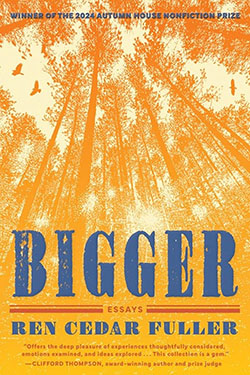
RCF: I wanted my collection to have a theme, so I made a spreadsheet and listed themes, characters, opening lines, etc., for each essay. One column was “Sentences I love,” and I noticed many of those involved my world expanding. The word Bigger comes from the end of “Naming My Father,” when I said, “He wanted my world to be bigger, which is what we want for those we love.” I thought Bigger was a placeholder, but Autumn House Press said they wanted to keep it as the title. I’ve only heard comments about the title when people praise Joel Coggin’s cover design: a bright orange forest that appears to be growing on the page. I love the cover!
AR: You’re a former teacher and preschool director. Do you think every parent wants their child’s world to be bigger, or would some parents rather their children remain cloistered and that they not surpass them?
RCF: Almost all of us who have children have sometimes been helicopter parents. We want our children to grow and thrive, but we also fear the bigger world might harm our babies. And we hold our children back for other reasons. Our culture may insist on it (like my family’s fundamentalism). Or a parent’s emotional growth may be stunted, keeping them from seeing their child has different needs, strengths, and dreams. The line about wanting a child’s world to be bigger, “which is what we want for those we love,” is aspirational.
AR: You set up your “I Am the Dippy Bird” essay, with the audacious-for-these-times claim that you are a happy person. You then go on to contrast this declaration with evidence that would challenge anyone to maintain a happy demeanor. From a craft perspective, was the set-up/pay structure of this essay intentional?
RCF: My early drafts of “Dippy Bird” were fragments about having Sjögren’s Disease. My writing partners saw potential, and I was a beginning writer so I thought the potential of an essay was close enough. I submitted it to Under the Sun literary journal and received feedback that the fragments were interesting, but had no narrative flow. Essays need to lead somewhere, discover something, change. When I revised the essay, a narrative emerged: I have always chosen to be happy, and now I have this disease that won’t allow me to cry. But that didn’t hand me an ending. I had to workshop and revise the piece for months before it was ready to submit. I learned so much through that process about structuring that essay, but every essay has its own structure, so I can’t take the form of “Dippy Bird” and plunk in a new essay.
AR: Also, any tips for how to sustain happiness in the face of chronic illness?
RCF: Whether we are dealing with illness or not, if our sole goal is happiness, we won’t find it. Happiness comes from a combination of nurturing our relationships, creating meaning, being curious (looking outside ourselves), and building routines that help us have as much physical well-being as possible. With those basics in place, feeling happy has a lot to do with our set point on the optimism/pessimism scale. My set point is, as my sisters have called it, “toxicly positive.”
AR: The last paragraph of “I Am the Dippy Bird.” It reads to me like “The Red Wheelbarrow” by William Carlos Williams, especially that phrase at the end: “my husband’s hand on the small of my back.,” What is your red wheelbarrow, i.e., what in your life does so much depend on?
RCF: My people. My ability to create. My work with TransFamilies and decades of work as a teacher. And many of the lovely things in my life depend on my privileges: my parents had quirks, but my sisters and I had a home, food on the table, the structure of library on Saturday and church on Sunday; I was able to pursue work I loved because, back in the 1980s, state universities were almost fully funded; several years ago, I was able to leave full-time work due to my disability; I’m white, able to walk, able to own a home, and English-speaking.
AR: You have a unique ability to zoom in and out in your essays. For instance, in “The Tar Rocks” you give us both geological history and granular detail about spending the summer at the beach with your best friend—bikinis, oozy PB&J sandwiches, sandcastles, popping kelp bulbs etc. Is this a conscious effort or does it come naturally to you as a writer?
RCF: The research part is easy because I’m a geek. I love discovering strange details and coincidences. I’m still learning how to weave research into story. I’ve taken a few craft classes, but mostly I’ve studied other writers. I’m reading Easy Beauty by Chloé Cooper Jones right now, and I have so many highlighter lines drawn next to paragraphs, which is my symbol for, “Look at this craft!” The sensory part is something I’ve also studied and practiced. It’s one of the first tools of craft my instructors at Hugo House highlighted in beginning writing classes. At first, I added random sensory details: The shirt was blue. It took years—and I’m still learning—to choose the sensory details that help me tell the story.
AR: Speaking of research, you deftly and subtly weave research—on topics as far ranging as autism, field sensitivity, and lies into some essays—into your essays and foreground your research in others, such as in “Four Words.” Did you always plan on writing a researched memoir or did it happen more organically?
RCF: My mother, who was born in Riobamba, Ecuador, used to say, “I was born at the foot of Mount Chimborazo.” For the first essay I wrote, which became “Let Us Sit on the Lawn,” I researched Chimborazo to see if Riobamba was actually at its base. Because our planet swells at the equator, Chimborazo’s peak is the farthest point from the center of the earth. And Ralph Waldo Emerson compared Chimborazo to a poet striving for artistic greatness. Metaphors were embedded in the facts. I love researching and taking notes about information that might inform my writing. I go down tangents just for fun, and each essay in Bigger involved lengthy research that never explicitly made it into the piece. The thrill is uncovering information that helps me tell the story.
AR: Explain how a time travel machine, a TARDIS, from the television show Doctor Who, showed up in Bigger.
RCF: I wanted to write about what it felt like when our middle schooler, Indigo, came out as transgender. I looked at photos, and there was the the full-size TARDIS my husband Jason had built. (He and Indigo had watched every episode of Doctor Who.) I hadn’t remembered Jason gave the TARDIS to our child the day before Indigo came out. Over many revisions, the TARDIS became a metaphor for how encountering a difference can make our world expand.
AR: “Let Us Sit on the Lawn” may be my favorite essay because, for one, that title is so evocative! And the ending! Hope. Tears. All the feels. You mention that by the time you were six, diversity was “the air I breathed in.” That line reminded me of an interview I did several years ago with a community psychologist who grew up in my hometown several years after me. She is Black. I am white and when I lived there, the entire population of 12,000 was white. She told me this: “When you live next to a family that is different,” Sullivan explained, “You begin to expand your capacity to stand with and for them, to dismantle the systems of oppression that affect their day-to-day life. When you don’t live next door to someone who is different from you…then it is easier for you to dehumanize yourself by standing up for policies and practices that literally kill them and their loved ones.” I have never forgotten those words and yours echo hers. My question is this: In a country that is currently backpedaling from all things diversity, in which the kinds of people you describe in your family are being targeted by rhetoric or worse, why do you think diversity is necessary?
RCF: Soon after Indigo came out, I read Milton Diamond’s words: “Nature loves diversity, society hates it.” Diversity is necessary for life. It is reality. Every culture throughout history has attempted to corral human diversity because it collides with our desire for connection, and connection is easier when people feel familiar. Diversity has choppy waters, and conformity is stagnant, but cultures with greater diversity are epicenters of innovation, and individuals living in the culture have more opportunity to thrive. When diversity is outlawed, it hides but doesn’t disappear. It waits, leaves breadcrumbs in the written record, and reemerges.
Allow yourself to tell the truth. I struggled until my mid-twenties with the belief that to “honor thy father and mother” meant keeping our family secrets. I took baby steps toward the truth.
AR: I love how you incorporate the March sisters from Little Women into a story about, in part, military pilots. What led you to make that association?
RCF: The word association is good—one memory or detail reminds me of another, and soon I’m a dozen steps away from what I thought I was writing about. I meander when I talk and when I write. The March sisters moseyed into “Eye Contact” because I wrote a bullet-point list about my elementary-school years, and reading Little Women made the list. It was one of my favorite books. That led me to remember I admired Jo and wished I was like her, but knew I wasn’t. The military pilots came from research about field independence and field dependence. I already knew the opening story from my work as a teacher, and I enjoyed reading articles and books by the scientist Herman Witkin to learn more about that aspect of psychology.
AR: The action of Bigger takes place over nearly sixty years, yet it doesn’t flow chronologically but jumps forward and backward in time. Why did you choose a non-linear structure?
RCF: As I mentioned, my essays build from associations, so they have lots of time jumps. I couldn’t make the collection chronological. Instead, I worked with Hattie Fletcher, my editor at Autumn House Press, to create narrative arcs that flowed through the essays—arcs for the characters of my mother, my child, and me.
AR: Where did you learn to write with such sensory detail?
RCF: All of my writing teachers, in classes and craft books, emphasize the need to bring readers into the scene by letting them see, hear, smell, touch, and taste. My early drafts are not sensual. They summarize the story and the scenes. An essay starts out as, “I want to write about the time my best friend and I spent the summer at the beach.”
I add one sensory detail, which reminds me of another, and then I remember Diane’s mom making us honey-sticky baklava, and how her dad’s breath smelled like beer and I found that comforting, because he asked me questions about my life (which my dad didn’t). In “The Tar Rocks,” I wrote about the summer after high school when I felt free in my body. I didn’t tug at my clothes because I worried about my stomach showing. I liked to feel the sand scrape my skin when I rode in on a wave. I remember the heat of the sun, and how the water grew colder the further down I swam. One time I heard Ellen Bass read a poem, and those of us in the audience felt the sensuality so strongly we still talk about it years later. Can you imagine writing like that?
AR: How would you compare your religious leanings today to those your missionary parents tried to instill in you?
RCF: My parents were fundamentalist Christians. We moved about once a year during my childhood, and the church gave us community. But, as I wrote in “Four Words,” my parents believed they had to value “Rules before relationships. Laws before love.” I began questioning their religion as a child and left their church by my early twenties. I felt ungrounded, though, so I made a poster of what I believed: “Truth, love, justice, peace, and beauty.” I used to read it every morning before leaving my apartment.
AR: Was it hard to face all the memories from your childhood?
RCF: I spent years processing my childhood through journaling, therapy, talking with friends, and walks on the beach. Later, when I began writing essays, I loved gathering the memories. I’d share what I was working on with my sisters at our weekly Zooms, and they’d add their own memories, or argue I remembered something wrong, or say I got it exactly right. We laughed a lot. I didn’t feel emotional when I was crafting sentences, but I’ve broken down a few times while giving readings. At first I thought it was unprofessional, but my writing friends tell me if I’m reading emotional scenes, it feels more real if I don’t try to be robotic.
AR: Has writing this book resulted in your meeting people who have had similar experiences as your own?
RCF: Yes. My essays cover so many issues families face. Readers have told me about their distant fathers; being the children of immigrants; their own journeys with autoimmune diseases; and having parents or grandparents with dementia. Through my work with TransFamilies, I know lots of families with gender diverse children, and I get emails several times a year from a friend of a friend whose kid just came out as trans. That’s also happened with people who’ve interviewed me about my book: When they finish their prepared questions, they lean forward and almost whisper, “Can I ask you something?”
AR: What advice would you give to someone who is struggling to deal with their own upbringing?
RCF: Allow yourself to tell the truth. I struggled until my mid-twenties with the belief that to “honor thy father and mother” meant keeping our family secrets. I took baby steps toward the truth. I read books. I chose friends—and a partner—who encouraged me to grow.
AR: With their child transitioning?
RCF: The most important thing for your child is for them to hear you will love them unconditionally. You may not understand what’s happening, but you will always choose your child. For yourself, find a support group with other parents whose children are gender diverse. PFLAG has in-person meetings in many cities, and TransFamilies and several Facebook groups have national online meetings. If you have questions, fears, and grief, bring them to your support group, not to your child.
AR: In writing Bigger, was it important to understand intergenerational trauma?
RCF: I processed (much of) what it meant to grow up in my family long before I began writing Bigger. While writing the essays, I focused on craft: How could I take what happened and tell a worthy story? For example, in “Resurrecting My Mother’s Childhood,” I realized my mother and I were both seven years old when we lost the places that felt to us like a garden of Eden. That parallel experience helped me tell our stories.
AR: Virtually every character faces the kinds of suffering that stem from prominent social issues, but the collection generally avoids sociology or systemic explanations. Why did you choose to focus on individual characters more than broader issues?
RCF: Labeling the social issues that impact a character can flatten the person, and stories come from three-dimensional characters. If it helps readers to name the social issues they see, that’s good. Systemic impacts are real. But labeling the issues doesn’t help me write the stories I want to tell. I suppose I’m trying to show, not tell.
AR: What has the reaction to your book been? What was the best response you have gotten? What was the worst?
RCF: Major reviews aren’t out yet, but the early-reader reviews have been positive. The best one I saw said Bigger “nudges the reader to think beyond the binary,” which would be an awesome result. None of the reviews so far have been negative, although several commented on how wonderful my husband, Jason, is in the book. I tease him about it, but I also wonder if reviewers typically praise the wives of male authors. I expect to get reviews I don’t like, but I’m lucky because if I tell my sisters about a bad review, they’ll go extreme sister-bear on the reviewers, which will feel great.
AR: What do you hope this collection might motivate readers to do?
RCF: I hope readers will embrace the complexity and joy of loving people who are different from them.
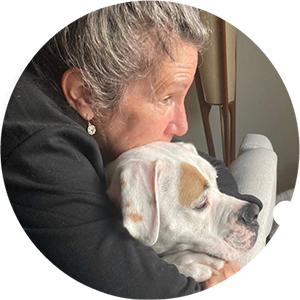
Amy Roost is the editor of two feminist anthologies: Fury: Women’s Lived Experiences During the Trump Era (Pact Press, 2020), and (Her)oics: Women’s Lived Experiences During the Pandemic (Pact Press, 2021). Roost is currently working on an MFA at Pacific University. She has bylines in multiple publications including, Ms. Magazine, Narratively, Writers Magazine, Dame, Next Avenue, and Publisher's Weekly.
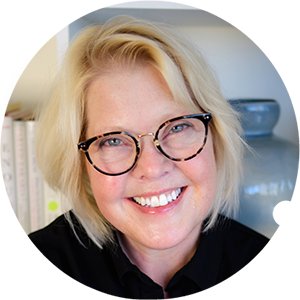
Ren Cedar Fuller’s debut book Bigger: Essays won the Autumn House Press Nonfiction Prize and was a finalist for the Iron Horse Prize and the Santa Fe Writers Project Literary Awards Program. Her essay, “I Am the Dippy Bird,” was published in North American Review Spring 2023. Ren’s essays have also appeared in Hippocampus, New England Review, and Under the Sun, and been nominated for a Pushcart Prize and Best American Essays. Ren is a parent facilitator at TransFamilies, an online hub for families with gender diverse children. After teaching public school, she founded a nonprofit preschool, where she continues teaching parent education. Ren lives in Seattle and loves to kayak slowly on the Salish Sea.
Recommended

“Tracing the shape of real bodies”: An Interview with Frances Cannon
Becoming Visible

A Conversation with Ted Kooser: In Dialogue with Judith Harris