


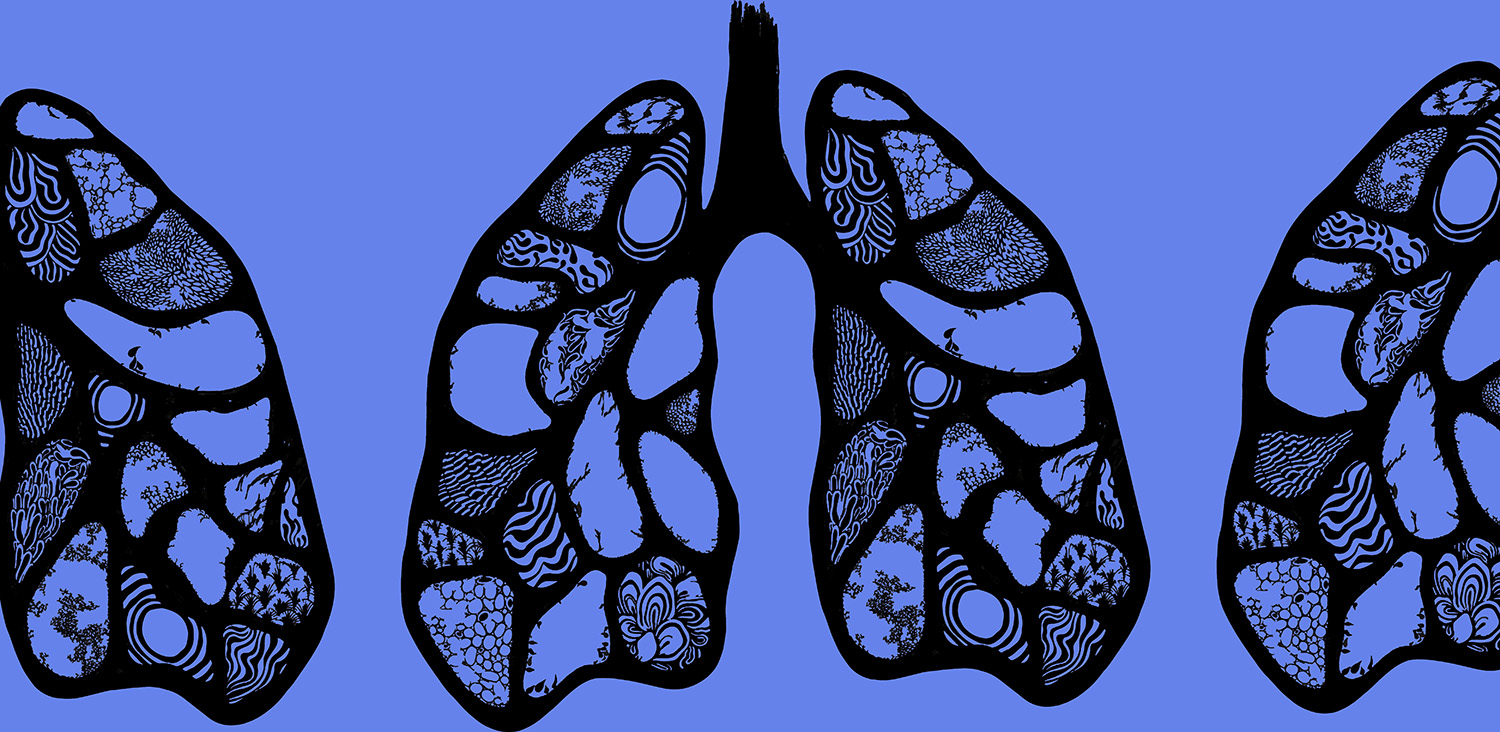
Oxygen Hungry
- I used to hold my breath. As a kid, when I’d get upset—hearing my dad rage about my brother Casey’s slide into the heroin addiction that’s still at his throat, or watching my mom dull herself from the inside out with gin—I’d go to my room, pinch my nose closed between my thumb and index fingers, and shut my eyes. I’d exhale into the darkness, deflating entirely, until my temples pulsed, and white spots glittered behind my eyelids like snow. Then, without trying to, I’d inhale and shudder back to life.
- Hypoxia means “not enough oxygen.” The prefix, hypo—Greek for “under” + —ox— (“oxygen”) + the Latin suffix for abstract nouns, —ia, “states of being.” It’s a simple word, easily dismantled and easily understood. But, as a reality, tough to survive.
- In humans, brain cells become damaged and start to die minutes after entering a state of total oxygen deprivation (anoxia). After five minutes, brain damage is permanent; much longer, and survival in any capacity becomes miraculous. Some animals have found ways around the limits of oxygenless environments. The crucian carp, a green-bronze, cyprinid with the small frown and rounded body of a goldfish, is known to survive weeks—months even—in anoxic frozen winter lakes by shifting to anaerobic respiration. Simply put, the cells of a crucian carp figured out how to generate energy without oxygen—in a way, to breathe without breathing.
On a hiking trip in Colorado, my friend tells me she’s worried. It’s day ten of fifteen, and for the past several nights, she’s heard me toss and turn against the nylon walls of my tent—unable to sleep—and watched me struggle to filter my water and find the motivation to eat. While we sit cross-legged in our tents with the vestibules open to the cross breeze, she says, “It’s the altitude, right?”
I pause for a moment, watching the alpenglow melt off the Tenmile Range, and realize she’s right. We’ve been moving steadily up in elevation, surpassing twelve thousand feet—of course it’s altitude sickness. While she reminds me of the symptoms—headache, fatigue, trouble sleeping, nausea, malaise—I think about my phone in my backpack on airplane mode. I think about how familiar altitude sickness—my body’s struggle to adjust to hypoxic conditions—feels. I think about Casey’s voice on the phone, urgent and serrated, asking me for money. And the way a missed call from my parents glows with unknown bad news. I think about the way dread feels in my body, like a slow suffocation—a lack of oxygen—and I take a deep breath, knowing nothing will change what’s missing from the air.It’s bright, but there’s no sunshine, just a blinding, white nothingness in the periphery.
- Sections of the Indian River Lagoon periodically “die” when nutrient pollution causes algal blooms to proliferate. These blooms blot out the sun, killing seagrass, and devouring the oxygen in the water as they decompose. The young and the bottom feeders get it the worst—bull shark pups and juvenile mullet, stingrays and blue crabs. When marine environments become hypoxic, they’re called “dead zones.” Some aquatic species relocate or survive long enough for the oxygen levels to balance out, some don’t.
- The average person will take more than six hundred million breaths in their lifetime—which averages out to around 12–20 times per sixty seconds—but people vary, and so do their minutes. In one, a boy might exceed the average intake while he gulps humid air, racing past his house by the lagoon playing Capture the Flag with the neighbor boys. Years later, when he overdoses on heroin, alone in a motel bathroom, his average breaths will dip well below the average, stopping entirely, until an EMT brings him out of hypoxic shock and into life again.
- I had a nightmare when I was young, one I’ve never forgotten, one so memorable and spot on, it almost feels manufactured. In it, I’m walking barefoot through our backyard towards the lagoon out back. It’s bright, but there’s no sunshine, just a blinding, white nothingness in the periphery. When I get to the seawall at the edge of the water, I see Casey, there in the clear shallows. He’s face down in the water, his hair moves softly in all directions, a tideless, gentle sway. Immediately, I know it’s him, and I know it’s too late. I’m sick. I scream. The dream ends. I remember, after I woke up, Mom being in my room. I remember how glad I was to see her—and how glad I was that her breath didn’t smell pine-like with gin. She smoothed her palm over the mess of my hair and told me to take a breath. I did.
- I know an ER nurse who says hypoxia can be sly, especially if the person’s breathing appears normal. Sometimes, when oxygen saturation levels get low enough, cyanosis appears, painting a person’s lips and the ends of their fingers a dull blue, but not always. A few weeks ago, she had a hypoxic patient. “Oxygen hungry,” she calls him, and tells me how, in the mere seconds it took for his levels to drop, he changed completely, becoming disoriented and confused. A second later, combative and violent.
- Dolphins and whales are conscious breathers. If a person passes out, the body will (barring some other obstruction or malfunction) keep breathing. If a dolphin or a whale loses total consciousness, they drown. Even while resting, their brains stay half-awake, alternating sides in unihemispheric slow-wave sleep. They don’t reflexively inhale, which also means, when they break the surface of the water and fill their lungs with oxygen, they’re deciding, every time, to keep living.
- Every morning, I take five deep breaths and imagine an odometer—numbers ticking and turning—silently counting up to my six hundred million breaths. Lately, I’ve been trying to come up for air, even when everything seems to be going wrong, turning blue. Some days I text Casey, just to know he’s still breathing. Other days, I call my parents. To listen to my mom punctuate a funny story about the cat with a small sigh. Or to hear the way my dad inhales just before he laughs. Sometimes I make coffee, but as I’m pouring boiling water over the grounds, I realize my hands are shaking, and I think about a crucian carp. I think about it alone in the ice-scattered sunlight of a frozen lake. I think about it swimming and circling, hypoxic and surviving.
Mallory C. Donoghue is a writer from Indialantic, FL, and a graduate of the University of Kentucky's Creative Writing MFA program. She has received support from the 2024 Juniper Summer Writing Institute, the 2025 UK Big Sky Residency, and the 2025 Bread Loaf Environmental Writers Conference. Her work has appeared or is forthcoming in Flyway and Fourth Genre.
Recommended
Wig

Strike
Lapsus Calami