


The Old Country
We took a fraught trip to the Czech Republic. My in-laws lost their families in the Holocaust, barely surviving themselves, and wanted their grandchildren to see Prague.
Our beloved cats Kotja and Red, old and frail, stayed with the vet. They must have been eating caviar, judging by what we paid. Before leaving, I sat outside at night, listening to cicadas, and the two rambling cats materialized out of shadows and moonbeams to get a scratch. I recalled winter, when I’d start a fire in the stove, and we’d listen to it crackle as the cats hopped up and stretched out on our laps.
Kotja was an acrobat who once leaped four feet into the air to snatch a gypsy moth. I could never do that. Now her kidneys were failing, like mine had, but she would not get a transplant. She needed frequent rehydration, which she did not appreciate, clawing me as I inserted a needle under silky calico fur. I nursed her and Red, who had diabetes. The laid-back leonine tabby kept purring like a locomotive when I gave him injections.
Clearly their time had come, though I couldn’t accept losing them: such was the cost of my poorly metabolized griefs. I knew the cats were stand-ins for the losses of my mother, father, grandparents, friends, doomed loves I failed to save.
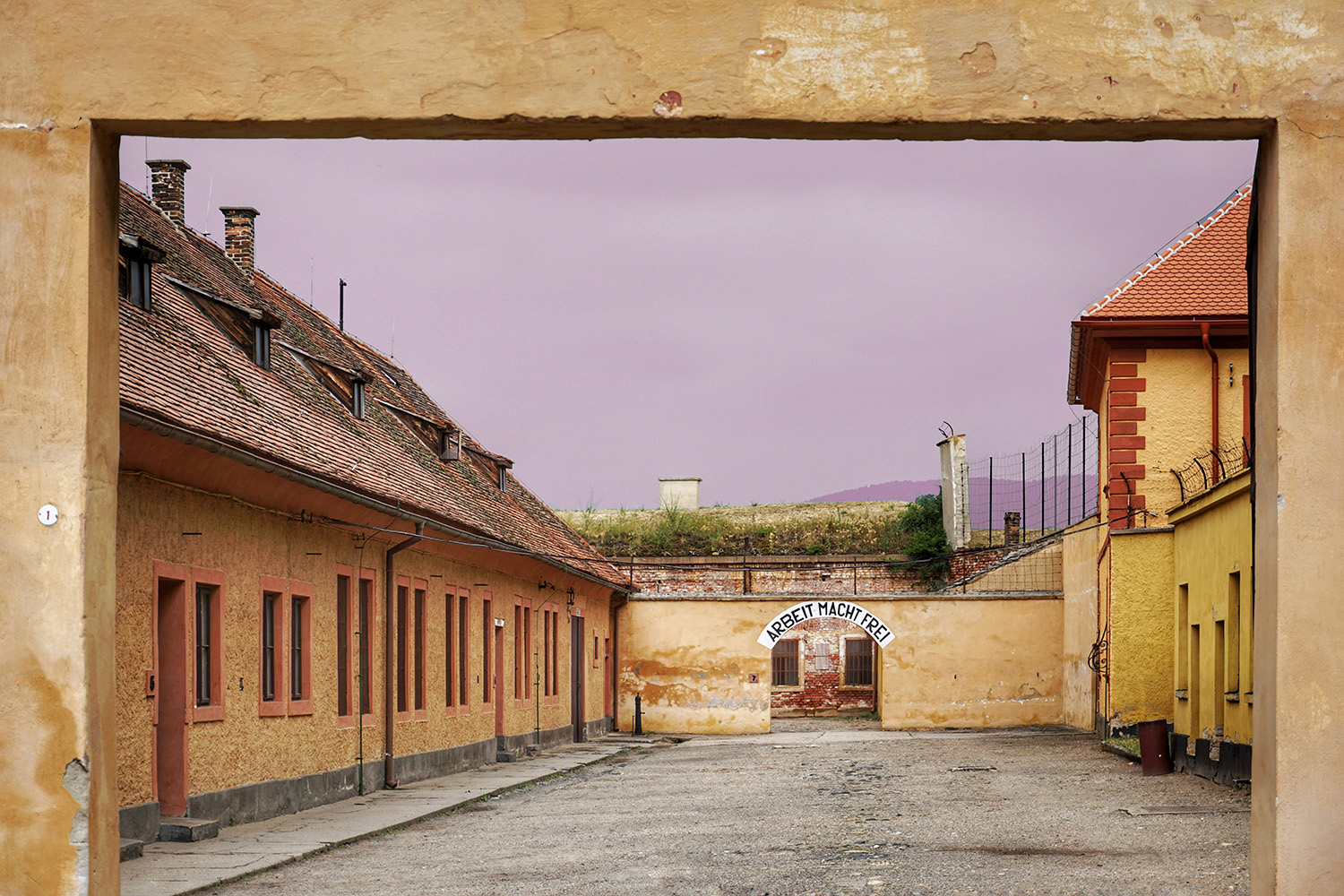
While sad, they were natural compared to those suffered by my wife Peggy’s parents, Jiří and Liška. Our children, Ben (eleven) and Sonja (six), knew little of this horrific history. In Prague we heard of murdered relatives and purloined properties, saw family names on the wall of an ancient synagogue, graves piled on graves, stones tilted or tumbled by centuries of frosts. We went to the Theresienstadt Ghetto, north of Prague, a show camp run by the SS that concealed a way station to the gas chambers.
Such trauma could not be put to rest, playing out at unexpected times. We were eating in a restaurant where the tables were too close to each other. Sonja, squeezing between them after hurrying back from the restroom to taste her dessert, spilled a wine glass, then knocked over the whole bottle on a man, a German.
We apologized profusely, offering to pay for dry cleaning, but he blasted Peggy, contemptuously lecturing her on poor parenting and Sonja’s deplorable table manners. I took umbrage, and we had a sharp exchange. By then Peggy had left, after alerting a waiter about the mess. Jiří and Liška looked away. Ben’s watchful eyes took it all in.
As planned, we took a side trip to explore Slovakia, leaving Peggy’s parents in Prague. On our way we saw cathedrals blackened with soot, crumbling castles, remnants of vanished Medieval kingdoms. We hiked into the High Tatra Mountains, ascending through pines and spruces, above the tree line to rocks and snow, looking skyward at the blue firmament. Despite the magnitude of all the tragedies, I hadn’t forgotten our cats and was shocked by my thoughts: spare me and disappear when I am far away. I can’t bear to put you down.
After the trip, I drove us home late at night, the rest of the family sleeping uneasily, Ben muttering phrases from a dream. I was singing softly to myself, “So, we’ll go no more a roving / So late into the night, / Though the heart be still as loving, / And the moon be still as bright” when I thought I saw an orange blur and heard a thud, but pulling over, I found nothing.
At work I thought how some people hear the voices of the deceased, or see them.
I wondered if it had been an omen, when Sonja and I went to fetch the cats. Meg the tech told us, measuring each word, “They both died within twenty-four hours of each other. Their hearts gave out.”
I held Sonja against me, to comfort her. I cried as we drove away: tears for the cats, and for all those losses, here and in the old country. I remembered my mother’s ragged breathing near the end, I remembered that as an orderly years before, I put tags on the toes of the deceased, before taking them to the morgue.
Peggy came home to hug us. Our children had never personally experienced a loss. Ben was sad. Sonja wanted to see the cats one last time, and maybe a viewing would have been best for her, but I couldn’t abide their stiff and lifeless bodies. Was there wisdom, a closure that eluded me, that I might get from seeing the dead? That hadn’t worked before.
A few days later, in a lighter mood, Peggy joked that after we set out for Prague, Kotja told Red, “He’s crazed! He’ll never let us die! Let’s make a suicide pact. It’s now or never.” Red, not good with words, said, “Meow!” Perhaps dogs will try to live on because their masters need them, but cats?
At work I thought how some people hear the voices of the deceased, or see them. One of my patients, who lived in a remote hollow in the Blue Ridges, said his mother was dying, but aside from worries about keeping her comfortable, he was sanguine: “After all, Paw died twenty years ago and he visits every night.”
So far, for me, there are only dreams of Red and Kotja in the old country, under a majestic maple. Kotja scampers up playfully, Red saunters over, flops down, and turns on his side. Typical. Mourning doves coo in the ivy on a collapsed church. I smell fresh clover, feel the grass under my feet. I see my grandparents having evening drinks under a fragrant Linden tree and wonder how they and the cats got here, realizing with sadness I may not be able to get them all home.
I wake up and tell Peggy the dream. I say, puzzled, “But my grandparents didn’t live in the old country.”
“It’s a dream! Maybe it’s where they and the cats went: the country of the dead, where everyone’s ancestors go.”
I realize she’s right. And Death, the air that we breathe filled with its yeasts, waits to take us there.
Meanwhile, I get up, and every morning is a wonder.
Robert Paviour is a former journalist who became a psychotherapist, and now lives in Charlottesville, Virginia. He has published stories in Poydras Review, Virginia Country, and The Ravens Perch.
Recommended
Wig

Strike
Lapsus Calami